Testmonials
Enquiry Form
Get in Touch with Us for Personalized Finance Assistance
Moving Home: Should You Let Out Your Current Property or Sell It?
- Date Published : September 11, 2026
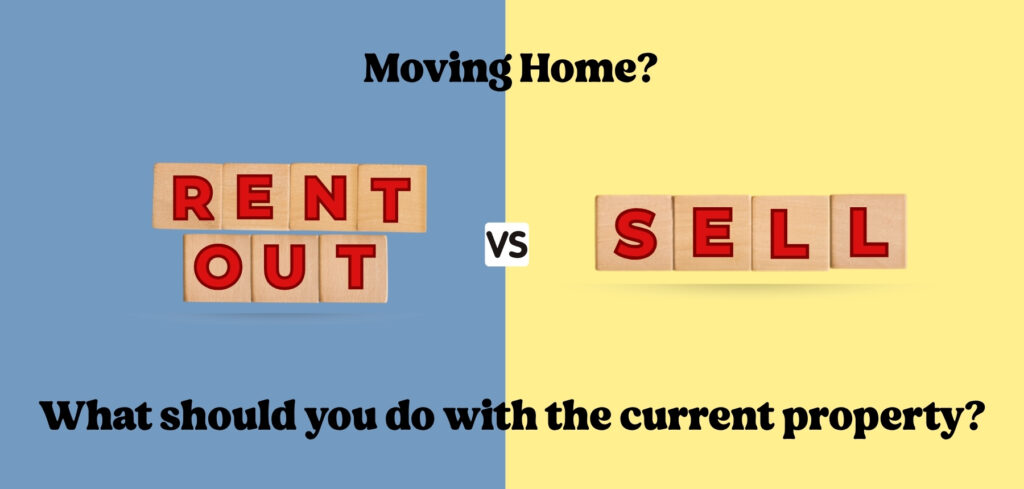
Unlike a first-time buyer, a homeowner looking to move has an extra decision to make before anything else: what happens to the property you already own?
Broadly, there are two routes.
- Retain and let out your current property, and buy the new one as an additional property.
- Sell your current property and buy the new one at the same time — which usually means being part of a chain.
Each route has different financial, practical and lifestyle implications. This article sets out both so you can work out which suits your circumstances, and we close with a side-by-side comparison and some common questions.
Option 1: Keep your current property and let it out
Before looking at the numbers, there are two questions to answer honestly. You need a “yes” to both.
Question 1: Do your finances allow it?
When you sell, all of the equity in your current home is released to put towards the next one. When you keep it as a rental, that is not the case.
- Equity you must leave in the property. As an absolute minimum, lenders expect you to leave 25% equity in the property you are letting out. Depending on the rental income the property can achieve and how the lender stress-tests it, the amount you must leave in may be higher.
- Additional stamp duty. Buying a new home while keeping your existing one means the purchase is treated as an additional property. The additional-rate surcharge currently stands at 5% on top of the standard rates. See our guide to stamp duty for home movers for how this is calculated.
So the question is whether, after leaving at least 25% equity behind and paying the higher stamp duty, you still have enough to fund the deposit and costs on the new property.
Question 2: Do you have the appetite to be a landlord?
Letting out a property is not simply another investment. It comes with ongoing legal, regulatory and practical responsibilities — and the regulatory bar has been rising steadily over recent years. Two of the most common practical points to plan for: you’ll need landlord insurance (standard buildings insurance doesn’t cover a let property), and the property will need to meet the minimum EPC rating required for rental properties, with the bar expected to rise further. Before committing, read our guide to the responsibilities of being a landlord and be honest about whether you have the time and the mindset for it.
If the answer to both is yes
You are in a strong position. Because you are not relying on a sale to fund your purchase, your new purchase does not fall within a chain, which removes one of the biggest sources of stress and delay in moving home.
The mortgage arrangement you will be using on your current property is technically called a let to buy mortgage — you are letting out your current residential property with a view to buying a new one. This is a well-established arrangement and we cover it in detail in our Let to Buy mortgage guide. Two points worth knowing at this stage:
- Simultaneous completion. Lenders expect the let to buy remortgage on your current property and the purchase of your new home to complete on the same day, so that you move out of the current property and it becomes available to let.
- What determines how much you can raise. The current market value of the property and the rental income it can achieve are the two key factors in how much capital a let to buy mortgage can release towards your new home.
- Consent to let. If you have an existing residential mortgage on the property, you’ll need your lender’s consent to let it out — either as a standalone consent or as part of the let to buy remortgage. Don’t assume this is automatic; check before you commit.
Option 2: Sell your current property and buy the new one
The financial side
Financially, this is the simpler route.
- All of your equity is released and available for the new purchase.
- No additional stamp duty is payable, provided you meet HMRC’s conditions and can show you are replacing your main residence.
- No landlord responsibilities — if being a landlord does not appeal, this route avoids it entirely.
The practical side
The trade-off is that you will be in a chain, and your sale and purchase must progress in step.
- Completion has to be aligned. You hand over the keys to your buyer on the same day you collect the keys to your new home, and move house that day. Completion day itself can be logistically demanding.
- Everyone in the chain must be ready. If your buyer has their own sale to complete (a downward chain), or your seller has their own purchase (an upward chain), every party has to reach the same stage before anyone can complete.
- One end often moves faster than the other. In practice, we regularly see clients who have found the property they want to move to but have no buyer for their own home — or who have a buyer lined up but nowhere to move to.
None of these challenges is insurmountable, and buying and selling at the same time is done successfully every day. But they should be planned for, and there is no option for managing a chain that comes without some disadvantage of its own. See our guide to breaking the chain for the main approaches.
A third route: buy first, sell later
There is a middle path for those whose finances are not dependent on the sale.
If you can fund the new purchase without the proceeds of your current home, can afford the additional 5% stamp duty up front, and would prefer not to be in a chain — but also do not want to keep the current property long term — you can:
- Buy your new home first, paying the additional-rate stamp duty.
- Sell your current property afterwards.
- Reclaim the additional stamp duty from HMRC once the sale completes (subject to the time limit — see the FAQ below).
This suits a specific set of circumstances: finances that are not restricted, and a clear intention to sell rather than let out.
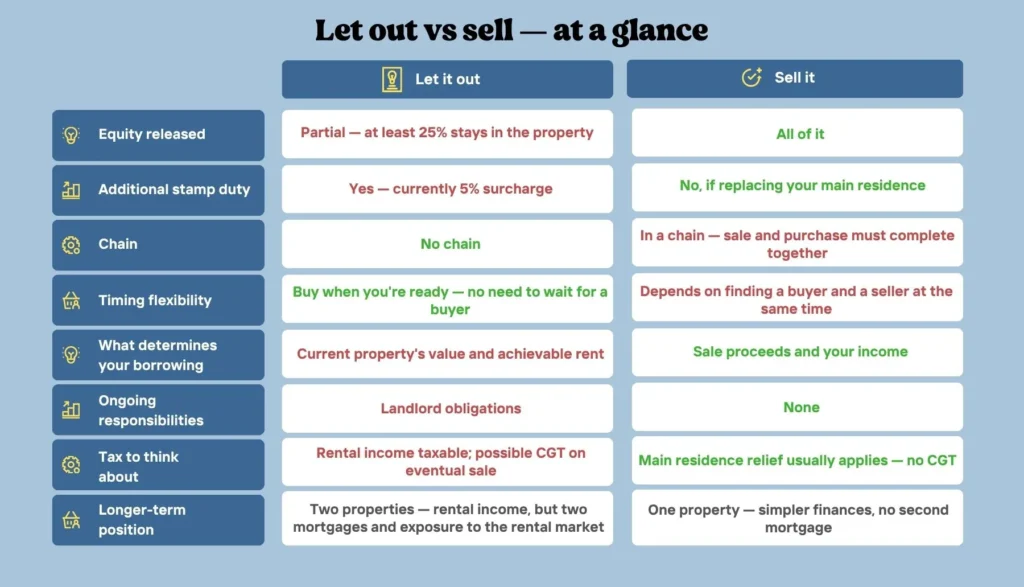
Letting out vs selling: side by side
Frequently asked questions
Technically, yes. If you decide to retain the property but would prefer to hold it through a limited company rather than personally, that is an option you can explore. Whether the numbers make sense depends on your circumstances — in particular, moving a property from personal names into a company is treated as a purchase by the company, so stamp duty is payable on the transfer. Our article on transferring a property from personal names to a limited company covers the considerations in detail.
Yes, this is possible, but two timing rules matter.
- Stamp duty reclaim. If you have paid the additional 5% stamp duty on your new home and want to reclaim it, HMRC requires the sale of your previous main residence to complete within three years of buying the new one.
- Renters’ Rights Act. Once you have let the property, you cannot serve notice to a tenant on the grounds that you intend to sell within the first 12 months of the tenancy. Plan your timing accordingly — a short let is a minimum one-year commitment in practice. Our Renters’ Rights Act guide explains the position in full.
Being a landlord is entirely achievable, but it is a regulated activity and the government has made it more so over the last few years. If you are prepared to understand the requirements, keep on top of them and manage the property properly, letting out your current home is a perfectly realistic option. Before you commit, make sure you have read the responsibilities of being a landlord, and be confident you have both the time and the attitude to give it — it is an additional ongoing commitment, not a one-off decision.
The two routes are taxed differently. If you let out your current property, the rental income is taxable, and you may face Capital Gains Tax when you eventually sell it. If you sell now instead, main residence relief will usually mean no Capital Gains Tax is due, since you are selling the home you have been living in. Tax treatment depends on individual circumstances, so it’s worth factoring into your decision alongside the financial and practical points above.

About the Author
Sekkappan Alagu is the Founder of Nachu Finance Ltd, established in 2006. With an early career in journalism and publishing, he brings clarity and structured thinking to complex financial topics. Through the Nachu Finance Blog and Knowledge Hub, he shares insights drawn from nearly two decades of client advisory experience, helping readers make informed decisions and understand best practices in mortgages, protection and long-term financial planning.

Business Profile
Nachu Finance Ltd is a directly authorised FCA-regulated firm providing mortgage, insurance and estate planning advice to clients across the UK. The firm takes a holistic approach — considering protection, tax efficiency and long-term planning alongside property finance — maintaining high regulatory standards while keeping advice clear and easy to follow. To learn more about the firm's background and story, visit the About Nachu Finance page.
Plan Your Move With Confidence