
Testmonials
"The entire team was very professional and proactive, making the whole process smooth and easy for us."
Ilford
First-time buyer
"He always presents options that suit my financial situation and helps me make informed decisions."
Leamington Spa
Remortgage client
"Sekkappan and the team were always on hand to answer our questions, and they followed up on everything promptly."
Hertfordshire
Remortgage client
"The service, advice, and support have always been consistent. Every email and call has been answered promptly."
Middlesex
Portfolio landlord
"Thanks to Sekkappan, we saved money on our mortgage and felt supported throughout."
Worcester
Home mover
"Sekkappan and his team took ownership of our requirements and guided us through every stage."
Aylesbury
Home buyer
"Sekkappan made the complex mortgage process feel like a cakewalk."
Croydon
Home buyer
"Their meticulous attention to detail and genuine care for our financial goals were truly appreciated."
Essex
Home buyer
Enquiry Form
Get in Touch with Us for Personalized Finance Assistance
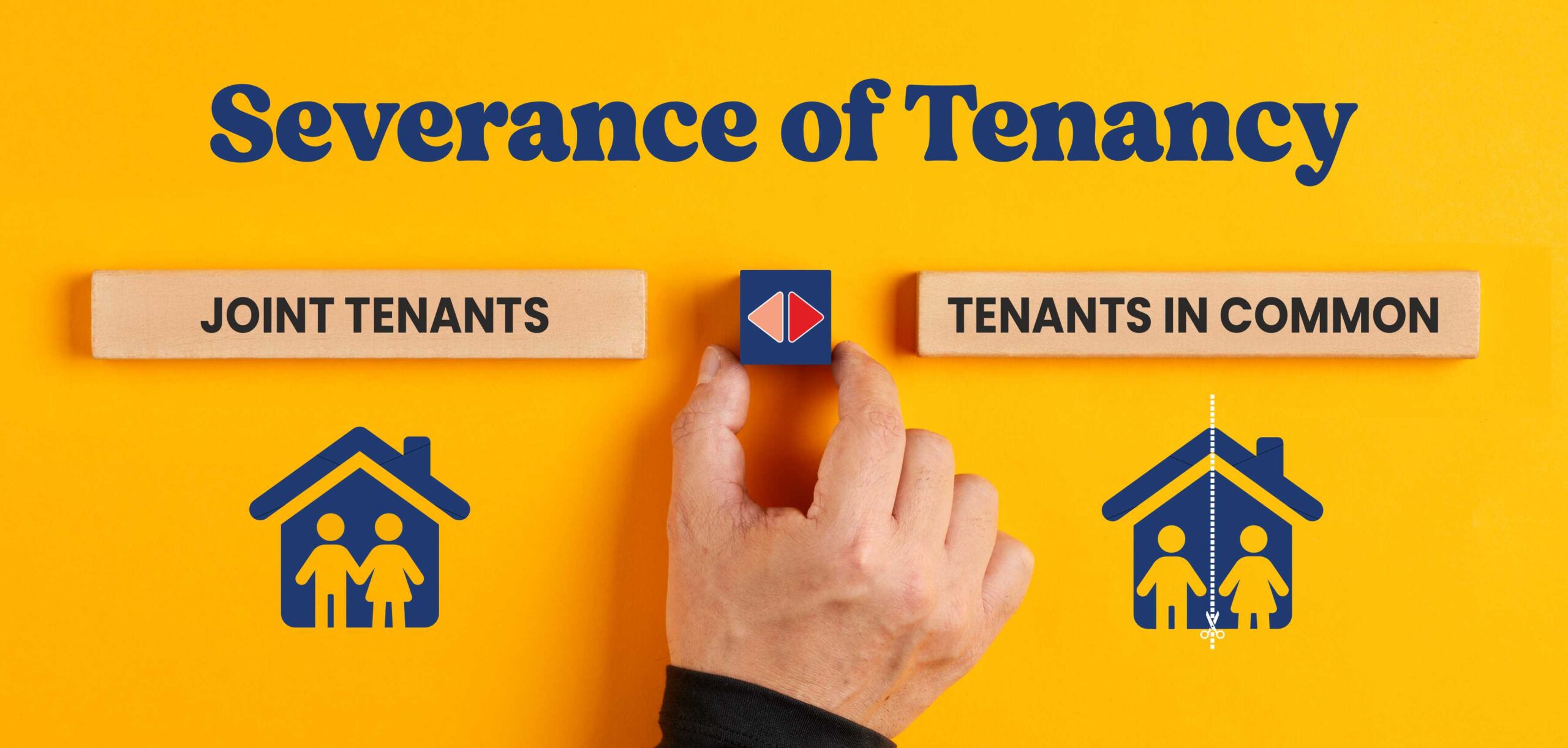
Owning a property jointly often begins with a default structure—Joint Tenants. But as life evolves, so do your priorities. Whether it’s about inheritance planning, tax efficiency, or protecting your family’s future, there may come a time when this default option no longer suits your needs.
At Nachu Finance, we guide you through the process of severing the tenancy, helping you move towards a structure that aligns better with your personal, financial, and estate planning goals.
What Is Severance of Tenancy?
Severance of tenancy is the legal process of changing how a jointly owned property is held—from Joint Tenants to Tenants in Common. This change can have significant implications, particularly when it comes to Wills, inheritance tax planning, and protecting your share of the property for future generations.
Joint Tenants vs Tenants in Common
The infographic below gives a quick comparison of how things change with severance:
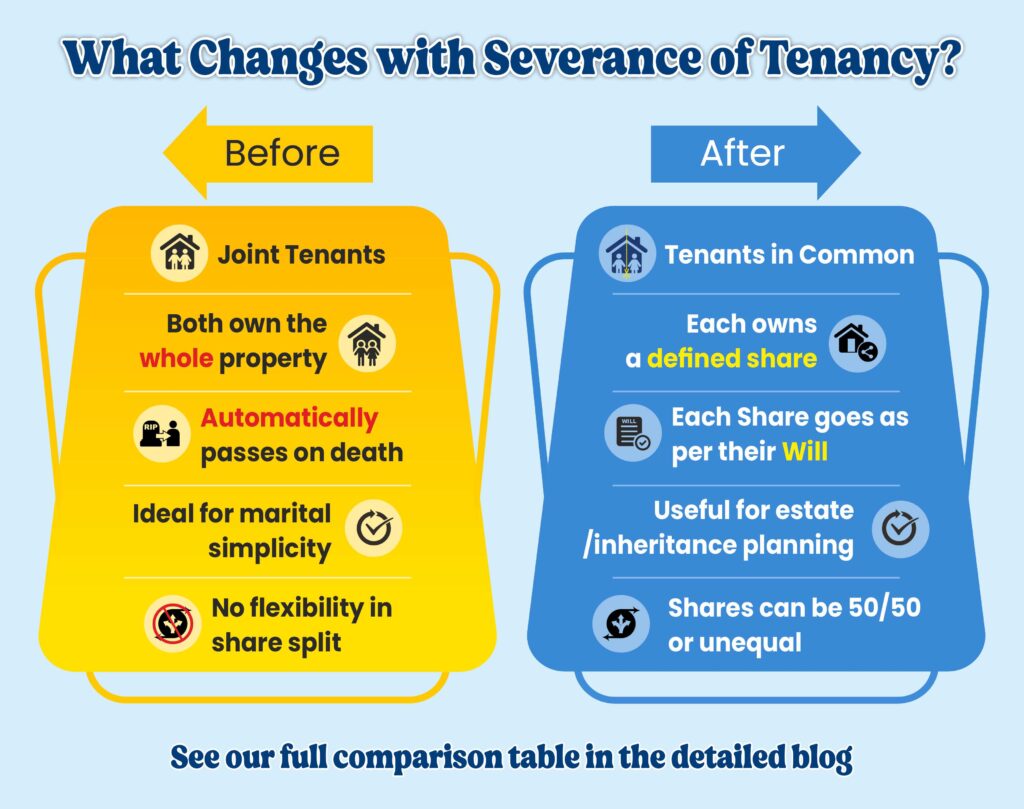
While most married couples default to joint tenancy, it’s worth noting that this structure can override even the most carefully drafted Will — because the property passes automatically to the surviving owner. Tenants in Common, on the other hand, puts you in control of how your share is handled, allowing you to plan more precisely for children, trusts, or blended family situations.
Severance is not just a legal formality — it can be the first step in building a more flexible, tax-efficient, and thoughtful estate plan. The right option depends on your personal goals, family dynamics, and long-term intentions.
See our full comparison article – Joint Tenancy Vs Tenant in common
Why Clients Choose Tenants in Common
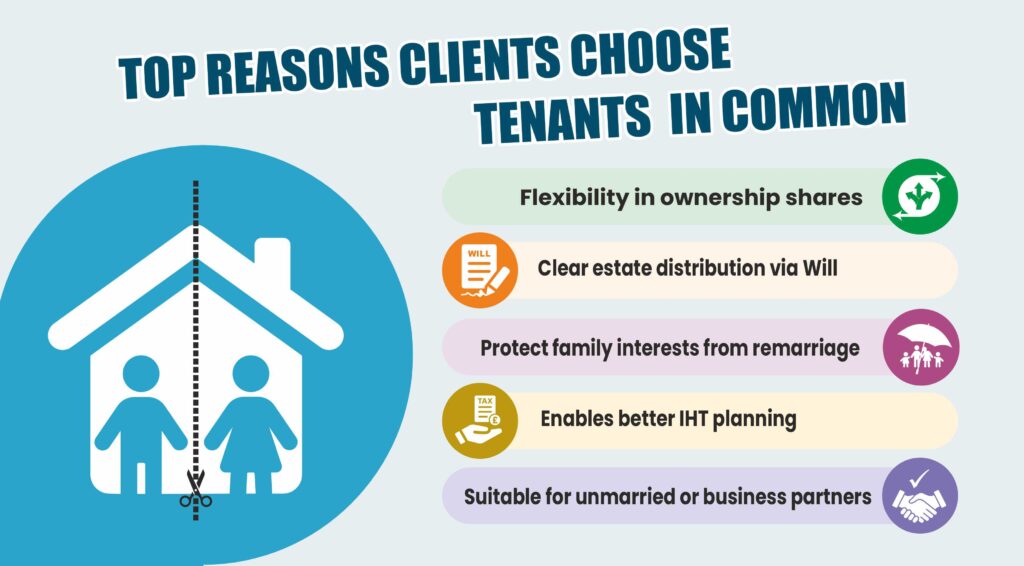
For many clients, severing the tenancy is an important step in gaining control over what happens to their share of the property — both legally and for tax efficiency.
Holding the property as Tenants in Common allows each owner to pass on their share according to their Will, which is especially valuable when planning for inheritance tax.
It opens up options such as placing the share in a trust, using the nil-rate band separately, or ring-fencing the value for children from a previous marriage. Without this structure, the default joint tenancy could override even the best-laid estate plans. Severance is often the quiet enabler behind a well-thought-out IHT strategy, especially when paired with appropriate Wills and Trusts.
Unequal Shares: Flexibility in Ownership and Tax Planning
Under a Tenants in Common arrangement, co-owners have the flexibility to hold property in unequal shares. These don’t need to reflect financial contribution — they can be based on mutual agreement between the parties about what feels fair or appropriate in their circumstances.
This flexibility allows you to plan ahead not only for ownership clarity, but also for how income, capital gains, and eventual sale proceeds are shared. In many cases, such arrangements are part of a broader inheritance tax (IHT) planning strategy, especially where one party wishes to ring-fence part of the value for children or direct their share into a trust.
The agreed ownership split can be formally documented through a Declaration of Trust, and where needed, we’ll also advise on complementary documents such as Wills and Form 17 (for spouses or civil partners) to ensure HMRC recognises the agreed split.
At Nachu Finance, we ensure these decisions are not made in isolation — but rather, in a way that integrates seamlessly into your wider estate and tax planning goals.
How to Check How Your Property Is Owned
You don’t need to guess how your property is currently held—you can check this yourself by downloading your Title Register from HM Land Registry.
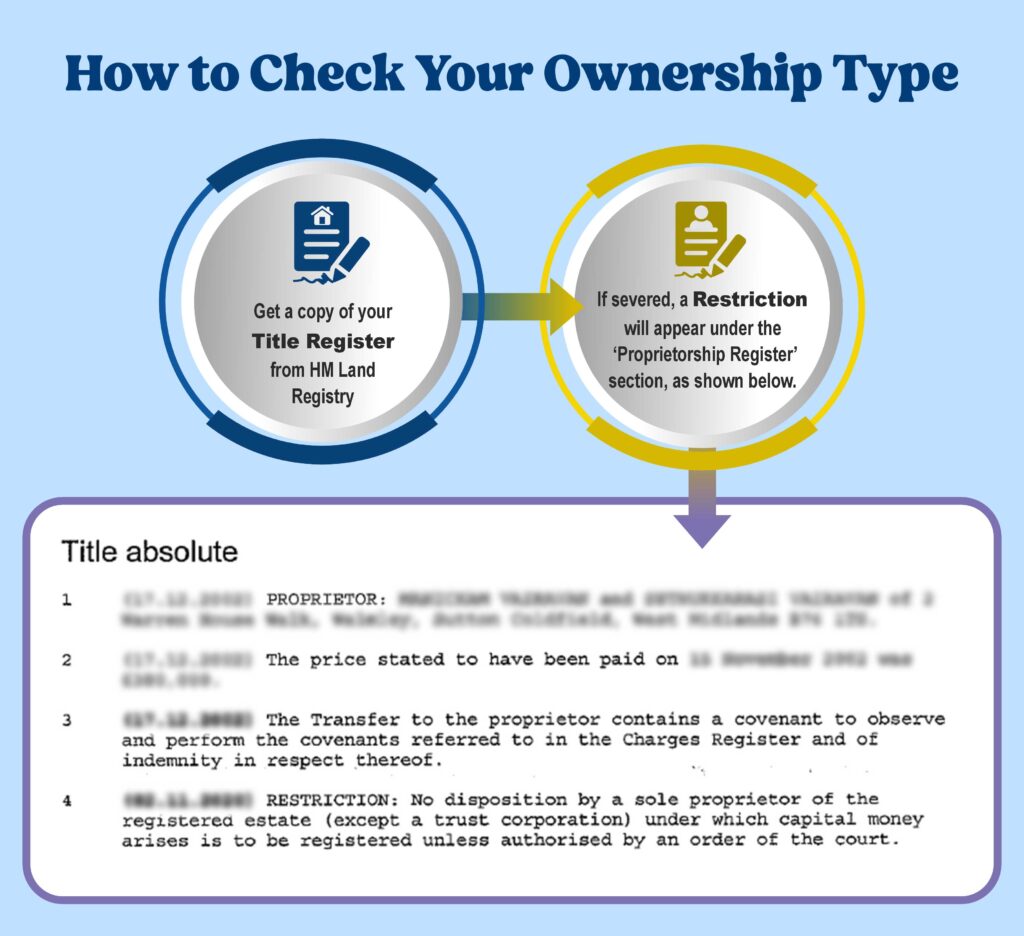
If the property is held as Joint Tenants, there will be no restriction shown in the “Proprietorship Register” section.
If the property is held as Tenants in Common, you will see a restriction, usually starting with:
“No disposition by a sole proprietor…”
Making Severance of Tenancy Simple and Aligned to Your Goals
Whether you’re exploring this change for tax efficiency, estate protection, or simply because your personal circumstances have evolved, we’re here to make the process clear, smooth, and tailored to your needs.
At Nachu Finance, we’ll:
- Review your current title and ownership structure, explaining what it means in simple terms.
- Advise whether severance makes sense in your situation, based on both short-term needs and long-term estate planning goals.
- Assist you with the Land Registry process, including any necessary forms or declarations.
- Ensure this change fits within your wider planning, whether that involves updating your Will, using Trusts, or inheritance tax planning.
We believe in joined-up thinking — not just ticking boxes.
More Than Just a Form – Strategic Guidance That Adds Value
Changing your ownership type isn’t just about filling in a form. It’s about making sure the structure reflects your family situation, your financial intentions, and your legacy.
With nearly two decades of experience, we’ve supported clients with a wide range of objectives — from protecting children’s inheritance in blended families, to balancing ownership shares in property investments.
At Nachu Finance, we don’t just do the paperwork. We help you understand the why behind the decision and how it impacts other aspects of your financial life — including your mortgage, your estate, and your family’s future security.
We Offer This as a Professional Service
At Nachu Finance, we offer Severance of Tenancy as a full-service offering — you do not need to engage a solicitor separately for this. We handle the entire process on your behalf, ensuring the correct forms are submitted and Land Registry records are updated properly.
Only Available as Part of Our Estate Planning Service
We handle Severance of Tenancy as part of our wider estate planning advice, not in isolation. That’s because we strongly believe that any change to ownership structure should align with your Wills, trusts, and overall inheritance strategy — not be done in a vacuum. This ensures the change is meaningful and doesn’t expose you to unnecessary risk, such as intestacy or future family disputes.
Severance Without a Will Can Create New Risks
It is not recommended to change from Joint Tenants to Tenants in Common without having a valid and appropriate Will in place.
Why? Because once severed, your share no longer automatically passes to the co-owner — and without a Will, your intentions could be lost or challenged under intestacy rules.
We’ll help ensure your Will is reviewed or created before proceeding.
Applicable to Both Residential and Buy-to-Let Properties
Whether you jointly own your home or an investment property, severance of tenancy may be appropriate. We can help you evaluate both types of ownership in the context of estate planning and inheritance tax strategy.
Affordable and Straightforward
The cost of carrying out a Severance of Tenancy is typically only a few hundred pounds — and per property, not per person.
Cost is rarely the barrier; in fact, many clients are surprised at how accessible this service is when done correctly.
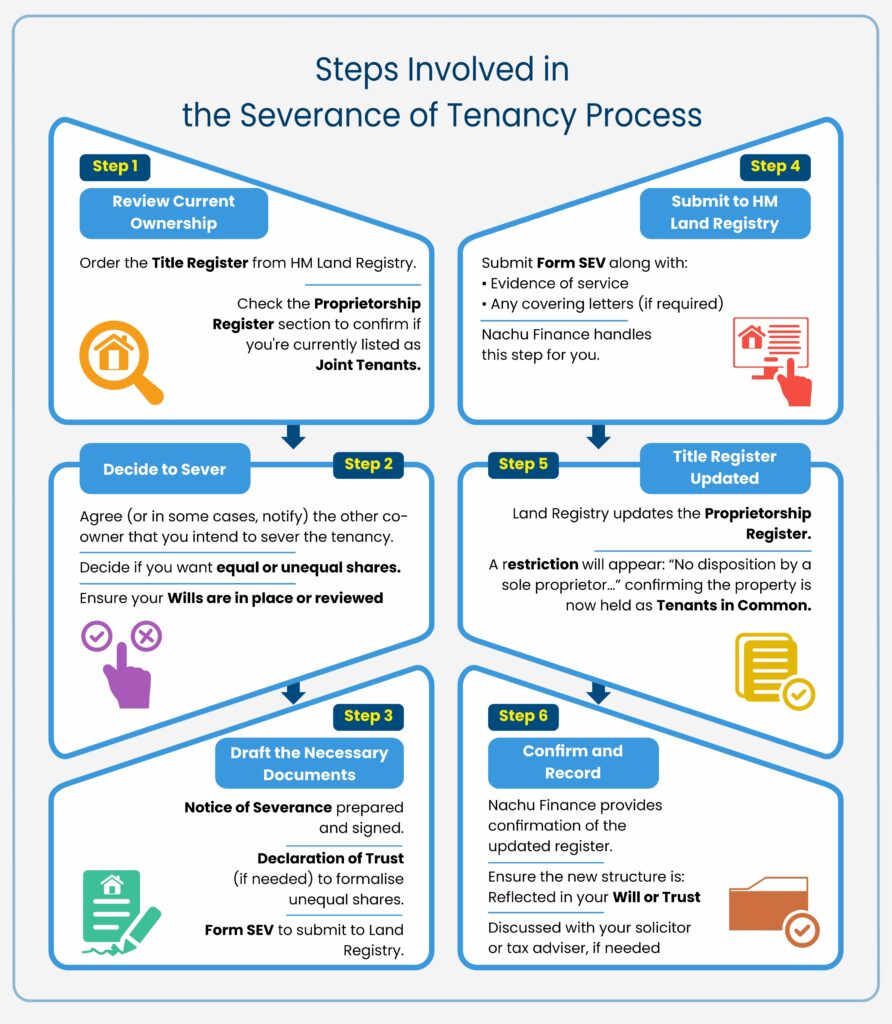
How Severance of Tenancy Works – Step by Step
Changing from joint tenants to tenants in common is a straightforward process when guided properly. Here’s a clear look at how we help you complete the severance smoothly and in line with your estate planning goals.
Frequently Asked Questions (FAQs)
You don’t usually need the lender’s permission to sever a tenancy as there is no change in the ownership of the property itself. If you’re also making changes like refinancing, it’s worth reviewing with us — we’ll guide you accordingly.
No — severance only affects how the property is dealt with upon death or in legal planning. It doesn’t change access, use, or day-to-day responsibilities while both owners are alive and in agreement.
Each owner’s share will be passed on according to their Will (or intestacy laws if no Will is in place). This is the key difference from Joint Tenants, where the surviving owner would automatically inherit the whole.
No. Severance is often beneficial for unmarried partners, siblings, or business co-owners. It’s about control and estate clarity, not relationship type.
Tenants in Common can leave their share in trust or structure their estate to take advantage of IHT allowances. Severance is often the first step before implementing more detailed IHT planning strategies.
Our Transparency Promise
Our Commitment to Honest, Aligned Advice
We’re proud to be honest — even when that means recommending that you don’t proceed.
If severing the tenancy won’t add value or align with your long-term goals, we’ll explain why and help you consider alternatives. Some clients may benefit more from a revised Will, while others might need broader estate planning rather than a change in ownership structure.
Our advice is based on what’s best for you — not what’s easiest for us to arrange.
That’s what we mean when we say: “Not afraid to turn away business.”
Ready to Rethink Your Property Ownership?
If you’re unsure how your property is currently held — or whether a change might offer more control or protection — we’re here to help.
We can review your title, explain your options, and support you with the next steps.
At Nachu Finance, we’ll guide you through what’s possible, what’s practical, and what’s most suitable for your long-term plans — ensuring that the allocation of income, gains, and ownership rights aligns with your shared understanding and future intentions.
Whether you’re early in your planning journey or ready to act, our advice will be clear, honest, and aligned with your goals.
Get in touch with Nachu Finance – and take the first step towards a smarter, more secure way to co-own your property.